
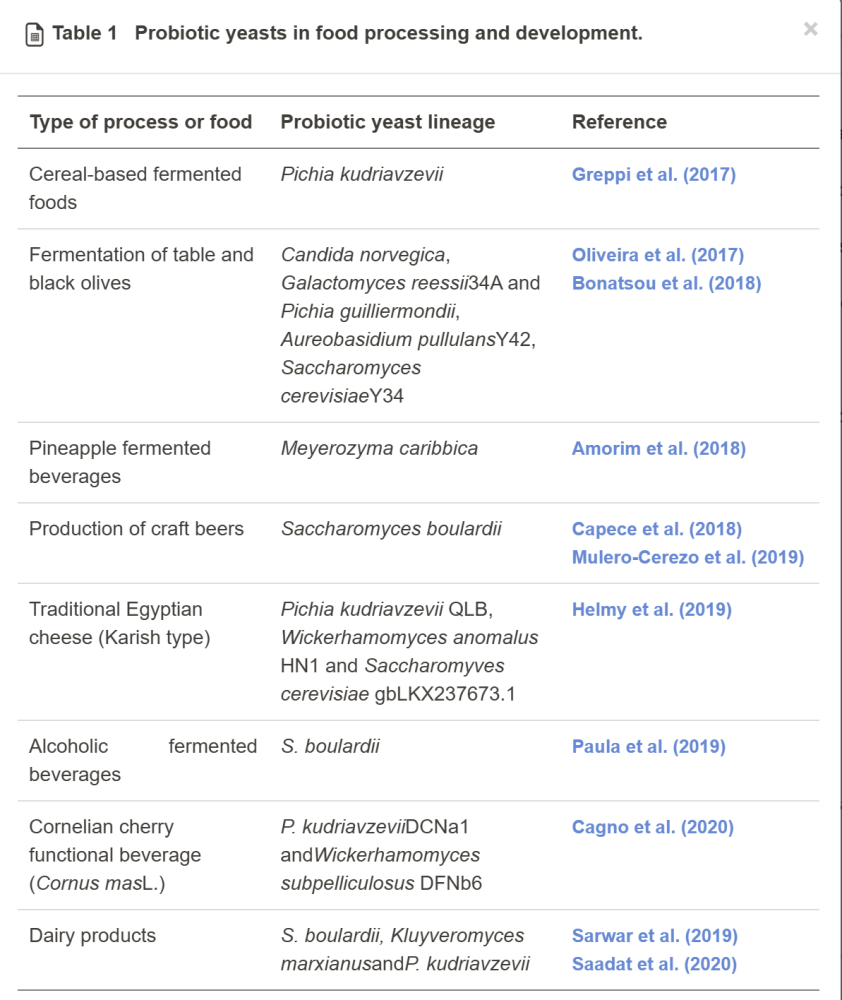
Studies conducted in the last decades have demonstrated the probiotic effects of several yeast species. Among the probiotic yeast evaluated, Saccharomyces boulardii is the most common and widely studied species with significant probiotic properties, such as survival capacity in the acidic environment of the gastrointestinal tract and improvements in the intestinal microbiota. In recent years, new evidence indicated that the incorporation of probiotic yeasts is also a promising approach in food development, thus leading to new perspectives for a more integrated strategy for a potential application of S. boulardii in the development of innovative functional food products. Recent published data on the application of probiotic yeast in foods shows that especially on the use of S. boulardii as a trend to develop several functional foods, such as non-alcoholic, fermented alcoholic, vegetable, and bakery products.
S. boulardii has several additional attributes that provide probiotic properties, such as the beneficial effects against enteric pathogens, including the production of compounds that neutralize microbial toxins, prevention of bacterial adherence and translocation in intestinal epithelial cells and modulation of the host cell signaling pathway associated with the pro-inflammatory response in bacterial infection (Moslehi-Jenabian et al., 2010). According to the literature, studies have attributed positive effects to S. boulardii in the treatment of inflammatory bowel disease (Abbas et al., 2014) and acute gastrointestinal diseases, such as viral and bacterial diarrhea (Kelesidis & Pothoulakis, 2012). Xu et al. (2016) evaluated the administration of S. boulardii in premature newborns to improve tolerance to growth and feeding and observed that the prophylactic use of S. boulardii in premature newborns accelerates weight gain and improves feeding tolerance. Additionally, in vivo experiments conducted with mice demonstrated the effectiveness of the oral administration of S. boulardii in the modulation of infection pathways in the intestinal mucosa, thus suggesting a new and valuable therapeutic strategy for intestinal inflammation (Justino et al., 2020).
Copyright © Shanghai Unibio Lab Co., Ltd.All Rights Reserved. - Privacy Policy
 EN
EN
